Self-Healing ITOps: Close the Loop From Detection to Resolution
Self-healing ITOps extends incident response beyond detection and diagnosis into automated remediation and validation. Learn how organizations reduce alert noise, improve MTTR, and decrease manual operational effort through AI-driven analysis, governed automation and Autonomous IT practices.
Self-healing ITOps helps restore services faster by combining AI-driven analysis, automation, and recovery validation.
Traditional monitoring and AIOps identify problems, but many organizations still rely on engineers to investigate, decide on corrective actions, and validate recovery.
Self-healing IT operations reduce alert noise, accelerate incident resolution, and automate repetitive operational tasks through governed remediation workflows.
Successful self-healing strategies combine observability, automation, Artificial intelligence driven analysis, and governance controls to expand automation without increasing operational risk.
LogicMonitor LM Envision, Edwin AI, and Catchpoint combine infrastructure, application, network, internet, and digital experience data to support self-healing ITOps and Autonomous IT.
Organizations have invested heavily in monitoring, observability, and AIOps. These platforms are effective at identifying issues, but incident resolution is often still a manual process. Engineers still need to investigate alerts, determine the appropriate remediation, and verify that services have recovered. Self-healing IT operations provide a way to reduce that manual effort required to restore service.
As environments expand, alert fatigue, tool sprawl, and growing infrastructure complexity make incident response more difficult to scale. Engineers spend significant time gathering context, correlating information across multiple systems, and coordinating response efforts instead of focusing on reliability improvements and strategic initiatives.
By extending incident response beyond detection and diagnosis into remediation and validation, self-healing ITOps can automatically execute approved corrective actions, verify recovery, and escalate only when human intervention is required.
The impact is already measurable. LogicMonitor customers using Edwin AI report 80–88% reductions in alert noise, 67% fewer ITSM incidents, and 85% faster resolution times. As organizations move toward Autonomous IT, self-healing ITOps automates repetitive operational work while maintaining governance and oversight.
Why IT Operations Still Struggle to Move From Insight to Action
Most IT operations teams have access to vast amounts of operational data. They have dashboards, alerts, observability platforms, and event correlation capabilities. What many organizations still lack is a reliable way to turn operational insight into action.
The challenge is not detection. Today’s observability platforms are highly effective at identifying performance issues, outages, and abnormal behavior. The challenge is what happens next. An alert is generated. An engineer reviews logs, examines topology data, checks recent deployments or configuration changes, and investigates the likely cause of the issue. In straightforward cases, resolution may be quick. In complex environments, incident response can involve multiple teams, systems, and tools before remediation begins.
Why Organizations Need More Than AIOps
Traditional AIOps platforms were designed for insight, not action. They help reduce alert noise, correlate events, and identify likely root causes. However, the outcome is often still a recommendation that requires human review and action. Engineers remain responsible for validating the diagnosis, selecting the remediation approach, and executing the change.
Tool sprawl introduces additional complexity. Many organizations rely on separate platforms for infrastructure monitoring, application observability, network monitoring, ITSM, and IT automation. When an incident affects multiple components of the environment, engineers often need to assemble information from several systems before they can fully understand the issue and its impact.
The operational cost is measurable. Teams that spend 60-70% of their time responding to incidents have less capacity for reliability engineering, prevention, and strategic initiatives. MTTR is high when engineers must manually gather context before taking action. At the same time, many organizations struggle to hire experienced SREs and operations engineers, forcing existing engineers to manage more systems and alerts.
What Is Self-Healing ITOps (Self Healing IT Operations)?
Self-healing ITOps is an approach to IT operations within an Autonomous IT operating model that uses AI, machine learning, and automation to automatically detect, diagnose, and remediate operational issues with minimal manual intervention. It reduces the amount of manual incident response required for recurring issues. When a known problem occurs, the system can identify the cause, execute an approved corrective action, and verify that service has been restored before escalating the issue to an operator.
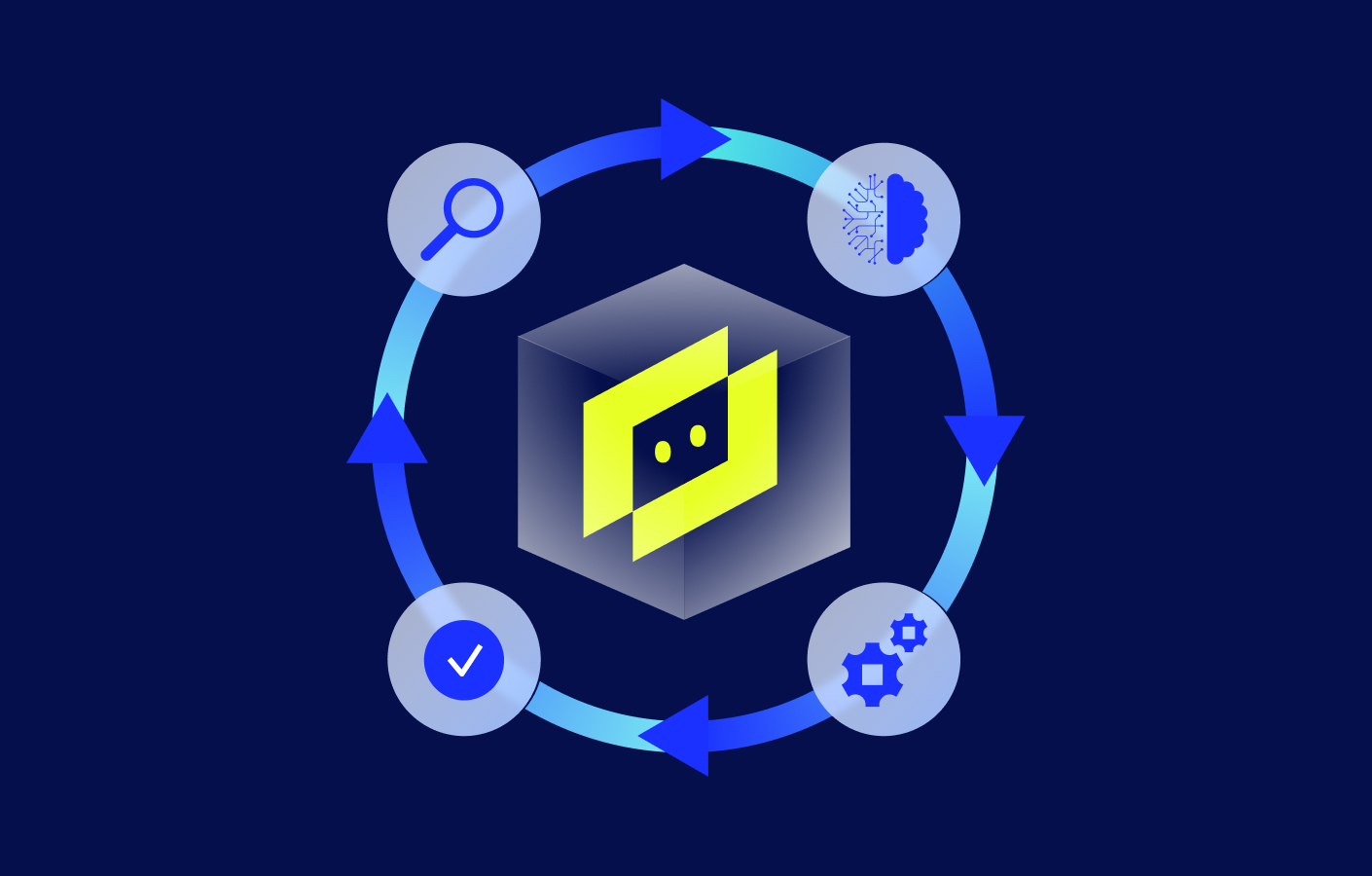
Most self healing IT systems follow a continuous cycle:
Detect: Monitor infrastructure, applications, networks, and dependencies for failures, performance degradation, and abnormal behavior.
Diagnose: Correlate related events and perform root cause analysis (RCA) to identify the source of the issue.
Remediate: Execute approved actions such as restarting services, scaling resources, clearing queues, or rolling back recent changes.
Validate: Confirm that the issue has been resolved and system performance has returned to expected levels.
If the issue cannot be resolved automatically, the system can escalate it to an operator, trigger additional remediation steps, or revert the change based on predefined policies and governance controls.
How Self-Healing IT Operations Differs From Basic Automation
Basic automation executes a predefined action when a specific condition is met. For example, a script may restart a service when CPU utilization exceeds a threshold or provision additional capacity when resource consumption reaches a predefined limit.
Self-healing ITOps applies these capabilities across self healing IT infrastructure, applications, and supporting services. Before taking action, the system can evaluate system health, dependency relationships, recent configuration changes, and previous incidents. The objective is not simply to run an automation task but to restore service using the most appropriate corrective action.
For example, if database latency increases after a configuration change, a basic automation may add more resources because utilization is high. A self-healing system may determine that the configuration change caused the problem, roll back the change, and then verify that database performance returns to normal.
How Self-Healing IT Operations Differs From Traditional AIOps
Traditional AIOps platforms are designed to help operations teams identify issues faster. They commonly provide anomaly detection, event correlation, alert reduction, and root cause analysis.
Self-healing ITOps extends those capabilities beyond issue identification. A self-healing system can execute approved corrective actions and verify whether service recovery was successful.
In practice, AIOps helps you understand what happened. Self-healing ITOps helps resolve the issue. Within an Autonomous IT operating model, both work together to reduce downtime, improve service reliability, and decrease the amount of manual effort required to operate complex IT environments.
Self-healing ITOps works through a continuous four-stage process: collect operational data, analyze the issue, execute approved remediation actions, and learn from the outcome. Each stage builds on the previous one and contributes to a closed-loop model that improves the accuracy and coverage of self-healing IT operations as new incidents are resolved.
Step 1: Unified Data Collection
Self-healing ITOps starts with a complete view of the environment. Infrastructure, cloud services, networks, applications, digital experience monitoring, deployment records, configuration data, and ITSM platforms generate the data used to detect, investigate, and resolve issues.
Collecting historical data from multiple sources is not enough on its own. The data must also be connected. Metrics may indicate that a service is failing, but they do not explain what changed, which systems are affected, or whether the issue is impacting users. Topology data provides dependency relationships. Deployment and configuration records show recent modifications. ITSM data adds historical incident and operational context. Together, these sources provide a more complete picture of what is happening across the environment.
This connected view is particularly important because many incidents originate outside a single application or infrastructure component. Internet routing issues, third-party services, DNS providers, CDNs, and network dependencies can all affect application performance and user experience. User-to-code visibility helps operations teams trace issues from the end-user experience through Internet dependencies, applications, and infrastructure.
LogicMonitor combines hybrid observability data from LM Envision with Internet Performance Monitoring and Digital Experience Monitoring from Catchpoint to provide this broader operational context within a single platform.
Step 2: Context-Aware Analysis
After the data is collected, the next step is to determine what is causing the issue and how far the impact extends. Metrics, logs, topology data, deployment records, configuration data, and ITSM history are analyzed together to identify the likely cause of the incident and the services affected.
The ITOps Context Graph connects relationships across infrastructure, applications, multi-cloud services, networks, and digital experience. This gives Edwin AI the operational context needed to evaluate incidents using information from multiple systems rather than analyzing alerts in isolation.
For example, a latency increase in a customer-facing service may be traced to a deployment that occurred 20 minutes earlier. The system can identify the affected downstream services, estimate the blast radius, and prioritize the incident based on business impact. A 200ms latency increase in an internal business application may have less business impact than a 200ms latency increase on a checkout page that directly affects revenue-generating transactions.
Edwin AI, the intelligence and orchestration system within the LogicMonitor platform, uses the relationships captured within the ITOps Context Graph to determine which services are affected, how many users may be impacted, and whether the issue affects business-critical transactions. This information helps prioritize remediation efforts. Incidents affecting customer-facing services or revenue-generating applications can be remediated before lower-priority issues, allowing self-healing actions to focus on the areas with the greatest business impact.
Step 3: Governed Remediation
After the likely cause is identified, the system selects an approved remediation action. Common actions include restarting a service, scaling resources, rolling back a configuration, or running a multi-step runbook.
In a LogicMonitor self-healing workflow, remediation can run through integrations such as Red Hat Ansible Automation Platform. The system first checks whether an approved Ansible playbook already exists for the diagnosed issue. If a matching playbook is available, it can run through the required approval gates and enterprise controls.
If no existing playbook matches the incident, IBM watsonx Code Assistant can generate a new Ansible YAML playbook based on the diagnosis. This closed-loop architecture between LogicMonitor, IBM, and Red Hat extends remediation beyond predefined automation. Rather than limiting remediation to a fixed library of playbooks, the system can generate a new remediation workflow when an approved playbook is unavailable. Any generated workflow remains subject to the same governance controls, approval requirements, validation checks, and audit processes as prebuilt playbooks.
Before and after remediation, the system runs checks to confirm the action is safe and effective. If the issue is resolved, the incident can move toward closure in the connected ITSM system. If the issue remains, the system can roll back the action and escalate to an operator with details about what was attempted, what changed, and why the remediation did not succeed.
Every incident resolved through a self-healing workflow generates operational knowledge that can be reused in future incidents. Detection data, root cause analysis, remediation actions, validation results, and incident outcomes are automatically captured and stored.
When a similar issue occurs again, the system can reference previous incidents, identify successful remediation approaches, and reduce the amount of investigation required before corrective action begins. This allows self-healing ITOps to expand automation coverage without requiring engineers to repeatedly troubleshoot and resolve the same issues.
Edwin AI automatically records what happened, what caused the issue, which remediation actions were executed, and whether service recovery was successful. As this knowledge base grows, more scenarios fall within governed automation boundaries and fewer recurring incidents require manual intervention.
This is how self-healing ITOps scales: by continuously capturing operational knowledge, reusing proven remediation approaches, and expanding automation within established governance controls.
Governance and Oversight: Keeping Humans in Control of Self-Healing ITOps
Successful self-healing ITOps requires more than automation. Organizations need governance controls that define which actions can be automated, when approvals are required, and how automated changes are reviewed. Without these controls, automated remediation can introduce operational risk.
Most organizations adopt a governed autonomy approach to self-healing ITOps. Low-risk remediation actions can execute automatically, while higher-risk changes require approval and oversight. As confidence grows, automation coverage can expand within predefined governance boundaries.
Core Governance Controls for Self-Healing IT Systems
Most organizations establish the following controls before expanding automation:
Intent-based policies: Define operational objectives, such as maintaining service latency below 200ms p99, rather than prescribing a specific remediation action.
Blast radius limits: Restrict the number of systems, services, or environments that an automated action can affect before additional approval is required.
Tiered approval paths: Allow low-risk actions to execute automatically while routing higher-risk changes through approval processes.
Audit trails: Record what action was taken, which data was evaluated, and why the action was selected.
Rollback capabilities: Provide a verified recovery path if validation checks indicate the issue was not resolved.
Edwin AI incorporates these governance controls directly into the remediation process. The Agentic Actions Library provides approved remediation actions that operate within predefined policies and approval requirements. Validation checks, audit records, rollback procedures, and approval controls are integrated into each execution path, giving organizations a way to apply self-healing capabilities while maintaining accountability and operational oversight.
How Do Self Healing IT Operations Produce Measurable Outcomes for Autonomous IT?
Self-healing ITOps changes how organizations detect, prioritize, and resolve incidents. As more operational tasks move from manual processes to governed automation, organizations typically see improvements in alert management, incident response, and operational efficiency.
80-88% reduction in alert noise: Edwin AI Event Intelligence uses correlation, deduplication, and enrichment to group related events into actionable incidents. This helps reduce the number of alerts engineers need to investigate.
67% reduction in ITSM incidents: Automated diagnosis and remediation reduce the volume of incidents that require manual intervention and ticket management.
85% faster incident resolution: Automated detection, analysis, and remediation shorten the time required to move from incident identification to service recovery.
313% ROI: A Forrester Total Economic Impact study found that organizations using Edwin AI achieved a 313% return on investment through reduced operational effort, faster issue resolution, and fewer service disruptions.
These improvements extend beyond operational metrics. Fewer alerts reduce investigation time. Faster remediation shortens incident duration and helps reduce mean time to resolution (MTTR). Automated diagnosis and response reduce the number of escalations and manual handoffs required to restore service. Earlier detection and remediation can also prevent issues from spreading across dependent services, reducing the need for large-scale incident response efforts and prolonged war room investigations.
As self-healing capabilities expand, engineers can spend less time managing recurring incidents and more time improving reliability, preventing future issues, and supporting strategic initiatives.
How Edwin AI Drives Self-Healing ITOps
Edwin AI provides the analysis, automation, and remediation capabilities that support self-healing ITOps within the LogicMonitor platform. It works across the incident lifecycle, from detection and diagnosis to remediation and validation.
Event Intelligence
Event Intelligence helps reduce alert noise by more than 80% through correlation, deduplication, and enrichment. Instead of investigating thousands of individual alerts, operations teams receive a smaller set of correlated incidents with information about affected services, dependencies, and business impact.
This helps self-healing IT operations to focus on the incidents that require attention rather than processing large volumes of duplicate or related alerts.
AI Agents for Investigation and Diagnosis
When an incident occurs, Edwin AI uses specialized agents to investigate the issue, analyze metrics, review logs, retrieve historical incident data, and identify likely causes.
The platform evaluates information from multiple sources, including telemetry, deployment records, topology data, and ITSM systems. It can identify affected services, estimate impact, and recommend remediation actions based on the available evidence. This helps accelerate root cause analysis across complex self-healing IT systems.
AI Automation and Remediation
After the issue has been diagnosed, Edwin AI can execute approved remediation actions through the Agentic Actions Library. This connects incident diagnosis directly to remediation.
Edwin AI integrates with IBM watsonx and Red Hat Ansible Automation Platform to support closed-loop remediation. The system can identify a suitable playbook, generate a new Ansible playbook when necessary, execute approved actions, and validate the outcome through predefined governance controls. These capabilities support self-healing IT infrastructure across hybrid and cloud environments.
Unified Visibility Across the Technology Stack
Edwin AI operates on top of LogicMonitor’s hybrid observability platform, which provides visibility across infrastructure, cloud services, applications, and edge environments. Combined with Catchpoint’s Internet Performance Monitoring and Digital Experience Monitoring capabilities, Edwin AI can evaluate incidents using data from across the user-to-code journey.
This unified view helps connect detection, diagnosis, remediation, and validation within a single operating model for Autonomous IT.
Getting Started With Self-Healing ITOps
A practical path forward starts with a specific, high-impact use case and expands from there.
Prioritize business-critical services and recurring incidents. Not every system needs self-healing on day one. Start with applications and services where downtime has the greatest business impact and where incident patterns occur frequently enough to support automation.
Establish a unified operational view. Self-healing depends on connected operational data. Metrics, logs, traces, topology data, deployment records, and ITSM information need to be available in a shared context. If telemetry is spread across disconnected tools, improving visibility and correlation should be addressed before expanding automation.
Define governance requirements before enabling automated remediation. Establish service priorities, SLO targets, risk policies, approval requirements, and rollback procedures before automated actions are introduced. Governance controls determine which actions can execute automatically and which require review or approval.
Start with low-risk remediation actions. Recommendations, incident enrichment, and approved runbooks for common issues are often good starting points. As operational maturity increases, organizations can expand into automated remediation, validation checks, and recovery actions for a broader range of incidents.
Measure operational impact before expanding automation coverage. Track metrics such as alert noise reduction, incident volume, mean time to resolution (MTTR), remediation success rates, and engineering effort. Use these measurements to determine where automation can be expanded safely and effectively.
The transition from reactive operations to Autonomous IT is typically an incremental process. Organizations often begin with unified visibility and incident correlation, then expand into governed autonomy, automated remediation, intelligent analysis, and continuous learning and improvement as operational maturity increases. Self-healing ITOps plays a key role in that progression by connecting detection, analysis, remediation, and validation into a continuous operational cycle.
See how Edwin AI powers self-healing ITOps in your environment.
Detect issues, identify root cause, validate recovery, and automate response workflows from a single platform.
No. AIOps focuses on detecting, correlating, and analyzing incidents. Self-healing ITOps goes a step further by automatically executing approved remediation actions and validating recovery. Many organizations use AIOps as a foundation before adopting Agentic AI capabilities that support governed autonomous remediation.
What Is the Difference Between ITOps, AIOps, and Self-Healing ITOps?
ITOps manages and maintains IT services. AIOps uses AI to improve monitoring and incident analysis. Self-healing ITOps adds automated remediation, reducing the amount of manual intervention required to restore services. It represents a more advanced application of artificial intelligence for IT operations focused on operational execution rather than analysis alone.
Can Self-Healing IT Systems Replace IT Operations Teams?
No. Self-healing IT systems automate repetitive operational tasks and common incident responses, but engineers are still needed for governance, architecture decisions, complex troubleshooting, and reliability improvements.
What Problems Can Self-Healing IT Infrastructure Resolve Automatically?
Self-healing infrastructure can automatically address common issues such as failed services, uptime issues, resource shortages, configuration drift, stalled processes, and known performance problems using predefined remediation workflows.